In this article
- Why does 1 January 2006 matter?
- First check the VIN and the American title
- The engine number must be clearly legible
- Amber reflectors at the front
- American turn signals that stay on
- Amber light in the front fender
- Red rear turn signals
- The MPH speedometer
- Check the headlight and other lights
- Exhaust and noise
- Tyres and brakes
- Mirrors and horn
- Be careful with heavily modified Harleys
- Our checklist before the inspection
- Check the bike before it leaves America
- Frequently asked questions
Why does 1 January 2006 matter?
For a motorcycle from outside the European Union, the date of first registration matters. In the Netherlands this is how it works:
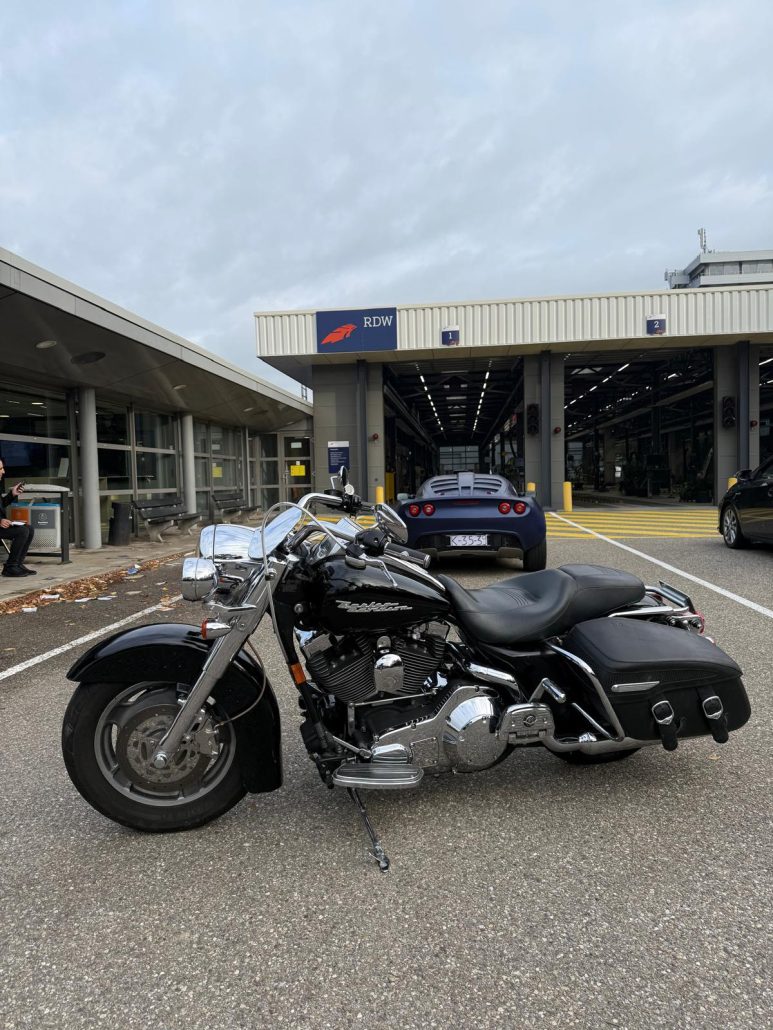
- For a motorcycle first registered before 1 January 2006, the RDW can carry out a technical inspection at a regular RDW inspection station on import.
- For younger motorcycles without European type approval, a different and more extensive individual approval procedure may apply.
This guide is therefore mainly about motorcycles from before 01-01-2006. More about the Dutch rules is at the RDW: approval of a vehicle from outside the EU (in Dutch). In Germany every US bike without EU papers usually needs an individual inspection (Einzelabnahme under § 21 StVZO) at TÜV, DEKRA or GTÜ, regardless of age. Other countries have their own procedure, but the practical points below come up almost everywhere.
First check the VIN and the American title
One of the first things we check is the VIN (Vehicle Identification Number), the frame number.
The VIN must be clearly legible and match the number on the American title and the other documents.
Preferably do this check before you buy the bike in America. A mistake in a document is usually easier to solve while the bike is still with the American seller than once it has arrived in Europe.
So we always check:
- the VIN on the frame;
- the VIN on the American title;
- the vehicle details on the documents;
- whether the VIN is clear and originally legible.
If something doesn’t add up, sort it out before you ship the bike.
The engine number must be clearly legible
Besides the frame number, the engine number is important too. We check the engine number on every American Harley-Davidson we prepare for inspection.
The number must be clearly legible and the origin of the engine must be clear.
In America it happens that an engine was replaced during the bike’s life. That doesn’t automatically mean the bike can’t pass, but you do want to be able to show where the replacement engine comes from.
Has the engine been replaced, or doesn’t the number match what you expect? Then make sure you have documentation, for example:
- an invoice for the engine;
- proof of purchase;
- an invoice for the repair or fitting;
- other proof showing the origin of the engine.
This is something you’d rather check during the purchase in America.
Amber reflectors at the front
This seems a small detail, but it’s one not to forget.
Make sure there are amber reflectors on both front sides of the bike. On many American Harley-Davidsons these sit on the fork legs.
At an RDW inspection we have seen the lack of these lead to a failure. That’s why we check before every inspection that both reflectors are present.
American turn signals that stay on
This is probably one of the most common differences between an American and a European Harley-Davidson.
On many American Harleys the front amber turn signals stay on continuously. They then work as so-called running lights. When you use the indicator, the same lamp starts flashing.
For a European inspection this function has to be changed. The front indicators should normally be off and only flash when you signal.
So:
- normal riding: lamp off;
- signalling: lamp flashes;
- indicator off: lamp off again.
Check this before the inspection. Depending on the Harley model and year, the way to disable this American running light function differs.
Amber light in the front fender
On certain American Harley-Davidson models, including several Electra Glides, you find amber lighting in or near the front fender.
This amber lighting must not stay on. We therefore check this before the inspection and disable the lighting if needed.
Note: this is something different from the amber reflectors on the front sides. Those must be present.
Red rear turn signals
Another question we get regularly is about the red turn signals at the rear of American Harleys.
On American versions the rear indicators can be red. In the Netherlands, on the motorcycles this guide is about, they don’t have to be converted to amber European indicators for the inspection, as long as they work correctly.
In Germany that is usually different: inspectors there normally require amber rear indicators. Check what applies in your country before the appointment.
The MPH speedometer
The speedometer also regularly causes confusion. An American Harley-Davidson usually has a speedometer where MPH (miles per hour) is the main scale.
For the Dutch inspection of these bikes the original American MPH speedometer doesn’t have to be replaced with a European km/h speedometer. That saves an unnecessary modification and keeps the bike as original as possible.
In Germany the speedometer must show km/h. Many US speedometers have a small km/h scale, which is usually enough. A pure MPH speedometer may need to be adapted.
Check the headlight and other lights
Check all the lighting on the bike before the inspection, including:
- dipped beam;
- main beam;
- rear light;
- brake light;
- number plate light;
- turn signals;
- any extra American lighting.
Don’t just check whether a lamp lights up, but also whether everything works correctly.
Especially on older American Harleys the wiring has often been worked on over the years. Aftermarket indicators, other rear lights and custom lighting are common. So test everything before your inspection appointment.
Exhaust and noise
Another important point is the exhaust.
Many Harley-Davidsons in America run aftermarket exhausts: open mufflers or systems from Vance & Hines, Rinehart or Screamin’ Eagle, for example.
The noise level in particular can become a problem. The RDW itself names noise as one of the points on which imported motorcycles from outside the EU regularly fail, and German inspectors are strict about it too.
Bought a Harley with very loud open exhausts? Check this before the inspection. Fitting a quieter or original exhaust before the inspection can save a lot of hassle.
Also check the air filter, especially if the bike has been heavily modified in America.
Tyres and brakes
A bike that has been ridden or stood for years in America must of course also be technically sound. So before the inspection we check the tyres for, among other things:
- enough tread;
- damage;
- dry cracks;
- correct size;
- load rating;
- clearance around the tyre.
On custom Harleys we pay extra attention to wide rear tyres. A tyre must not rub against the fender, the belt or other parts of the bike anywhere.
We also check the brakes carefully: pads, discs, brake lines and any leaks, on both front and rear brake.
Don’t forget the brake light switches either. The brake light must work correctly with both the front and the rear brake.
Mirrors and horn
Simple parts can cause problems too. Check that the required mirror or mirrors are present and give enough view to the rear.
Custom Harleys sometimes have extremely small mirrors. That can look nice, but check in advance whether they’re usable.
Test the horn as well. A horn that doesn’t work is easy to fix in advance and not a good reason to have to come back for a re-inspection.
Be careful with heavily modified Harleys
A different exhaust, handlebars or set of wheels doesn’t immediately mean a bike needs a complicated inspection procedure. With major structural changes that can be different.
Think of a modified frame, changed wheelbase, heavily modified front fork or another far-reaching structural change. For such bikes additional requirements or a more extensive individual approval may apply.
So with a heavily modified American chopper, check before buying what exactly has been changed to the frame and construction.
Our checklist before the inspection
Before an American Harley-Davidson from before 2006 goes to the inspection, we check at least:
Documents and identification: VIN legible and matching the title, engine number legible and, with a replaced engine, proof of origin available.
Lighting: dipped beam, main beam, rear light, brake light, number plate light and all indicators work. The American front indicators don’t stay on and any amber lighting in the front fender is disabled.
Reflectors: amber reflectors are present on both front sides.
Technical: tyres, brakes, wheel bearings, steering head, horn and mirrors are checked and there are no dangerous leaks or loose parts.
Exhaust: the exhaust is technically sound and the bike doesn’t make unnecessary noise.
In the Netherlands the red American rear indicators and the original MPH speedometer can stay on these bikes. In Germany you usually need amber rear indicators and a speedometer that shows km/h.
Check the bike before it leaves America
The most important advice is actually very simple: check as much as possible before the bike leaves America.
A missing reflector or a wrongly connected indicator we can easily fix in Europe. A problem with the VIN, engine number or the American title is a different story.
At Harley’s Enzo we view and buy motorcycles in America, and that’s exactly why we pay attention to these points when buying. Good preparation before purchase and before the inspection prevents surprises, extra costs and unnecessary re-inspections.